








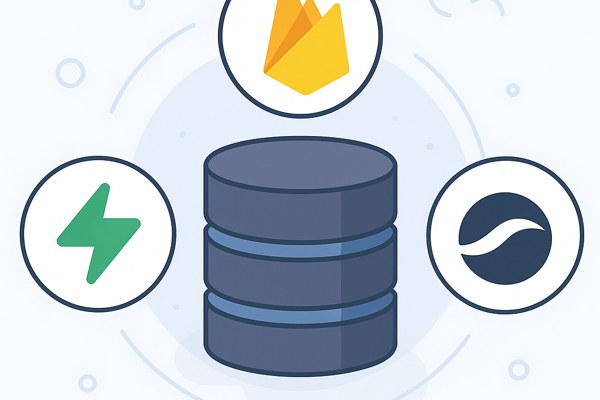
Choosing the right backend platform is crucial for founders, marketers, and builders aiming to develop scalable applications quickly while maintaining control over data and infrastructure. Supabase, Firebase, and PlanetScale are three popular options, each with unique strengths and trade-offs. This post dives into their key features, pricing models, database types, real-time capabilities, and ideal use cases to help non-developers and technical leaders make informed decisions.
Understanding the Core Technologies
Supabase is an open-source backend-as-a-service built around PostgreSQL, a powerful SQL relational database known for its richness and robustness. It offers real-time features, built-in authentication, and storage services tailored for rapid app development.
Firebase, created by Google, is a proprietary platform that uses Firestore and the Realtime Database, both NoSQL, document-oriented databases. It focuses on seamless integration with Google Cloud services and excels in real-time synchronization.
PlanetScale provides a serverless database platform based on Vitess, built on MySQL compatibility. It is designed specifically for high scalability and availability, used by large-scale applications requiring features like non-blocking schema changes and database branching.
Comparing Database Types and Query Language Support
Database structure and querying are fundamental considerations:
- Supabase: Full PostgreSQL support means you get rich features such as JOINs, Common Table Expressions (CTEs), window functions, and standardized SQL queries — essential for complex data relationships and analytics.
- Firebase: Firestore provides a limited query language suitable for common filters and indexing but lacks full SQL capabilities. It is optimized for rapid development in NoSQL patterns but may be restrictive for complex relational queries.
- PlanetScale: Supports MySQL-compatible SQL with JOINs and transactions, though some advanced PostgreSQL features are absent. Its focus is on reliability and scalability over query complexity.
Real-Time Features and Scalability
Real-time data synchronization is a vital feature for apps requiring live updates without refreshes, such as messaging or dashboards.
- Supabase: Uses PostgreSQL’s LISTEN/NOTIFY mechanism over WebSockets to support unlimited concurrent connections. This facilitates real-time features natively in a SQL environment.
- Firebase: Provides robust real-time synchronization through Firestore listeners and the Realtime Database, supporting up to 100,000 concurrent connections — making it mature for complex real-time applications.
- PlanetScale: Does not currently offer built-in real-time data synchronization but focuses on high throughput and availability for traditional database needs.
Pricing Models to Consider
Budgeting your backend costs can be complicated. Here is a breakdown of pricing approaches:
- Supabase: Offers a tiered pricing model starting with a free plan that includes 500 MB database storage, 1 GB file storage, and support for up to 50,000 monthly active users. Paid plans start at $25/month, suitable for growing apps needing more resources.
- Firebase: Operates on a pay-as-you-go Blaze plan beyond the free Spark tier. While the free tier includes 1 GB of Firestore storage and 5 GB file storage, costs grow with reads, writes, and storage, which can lead to unpredictable expenses for large-scale apps.
- PlanetScale: Provides a free tier with 5 GB of storage and 100,000 reads per day. Paid plans scale based on storage and throughput requirements; detailed pricing is available on their official website.
Use Cases and Ideal Audiences
Each platform is suited for different project types and user needs:
- Supabase: Ideal for developers or teams who prefer open-source tools, seek a full SQL backend, and want real-time capabilities without vendor lock-in. Great for startups aiming to build MVPs quickly with an extensible platform.
- Firebase: Best for those already invested in Google Cloud, or building apps prioritizing real-time synchronization with straightforward NoSQL databases. Popular among mobile app developers and marketers targeting rapid prototyping.
- PlanetScale: Tailored for applications demanding massive scale, high availability, and complex operational features like branching and non-blocking schema changes. Well suited for enterprise-level services and production workloads requiring MySQL compatibility.
Quick Decision Checklist
- Need full SQL support and advanced queries? Choose Supabase.
- Looking for deep Google Cloud integration and scalable real-time sync? Go with Firebase.
- Require enterprise-grade scalability with MySQL compatibility? PlanetScale fits best.
- Concerned about pricing transparency? Supabase offers predictable tiers, whereas Firebase may have variable costs.
- Want open-source and community-driven tools? Supabase is the strongest candidate.
- Real-time features are critical? Firebase and Supabase both excel.
- Working on large-scale apps needing advanced schema management? PlanetScale stands out.
Conclusion and Next Steps
Choosing between Supabase, Firebase, and PlanetScale depends heavily on your app’s technical needs, budget, and growth expectations. Supabase offers a powerful, open-source, SQL-first backend with modern real-time support, making it an excellent choice for teams that want control and flexibility. Firebase shines in integrated, real-time applications in the Google ecosystem, though costs can fluctuate with usage. PlanetScale is geared toward massive scalability and operational excellence for established businesses requiring MySQL compatibility and advanced database features.
To dive deeper into backend options and app development strategies, visit our development guides at Techzog. For official documentation and current updates, check out the Supabase Docs to explore its extensive features.
Start by identifying your app’s data complexity, real-time needs, and budget to select the backend platform that will support your growth without compromising on performance or control.